Whether you’re a screenwriter, lyricist, music composer, or independent filmmaker, the contracts you sign can shape your creative future. Unfortunately, many creators sign agreements without fully understanding what they’re giving away — and end up losing credit, control, or compensation.
In this blog, we break down the top 5 contract mistakes creators often make, and how you can avoid them without needing a law degree.
Why Contracts Matter for Creators
A contract is not just paperwork — it decides:
- Who owns your work
- How you’ll get paid
- What rights you keep (or lose)
- Whether you’ll be credited or forgotten
Without a solid contract, your talent can be used — but your rights can be ignored.
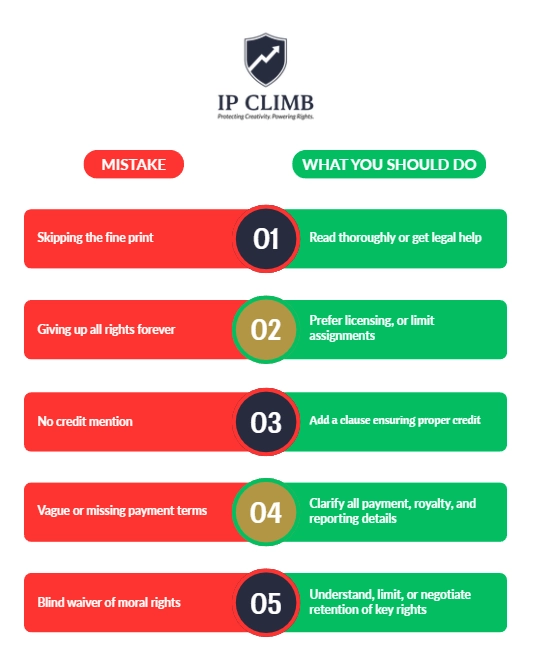
Mistake #1: Not Reading the Fine Print
The Problem: Many creators don’t read the full agreement — especially the clauses in small font or legal language. Buried in there could be terms about waiving your rights, giving up royalties, or transferring ownership forever.
Mistake #2: Assigning All Rights Without Limitations
The Problem: You may be asked to “assign all rights” in your work, even for one-time use or short-term projects. This means the other party can exploit your work forever — even remake, sell, or modify it — without your permission.
Mistake #3: No Credit Clause
The Problem: Credit is everything for a creator’s reputation — yet many contracts don’t clearly state that you will be credited. As a result, your name might be missing from the final film, music platform, or promotional material.
Mistake #4: Missing Payment Terms or Royalties
The Problem: Some contracts mention vague payment terms — or none at all. Others promise “royalties” without clarifying the percentage, mode of calculation, or timeline.
Mistake #5: Waiving Moral Rights Without Understanding
The Problem: Indian copyright law gives creators moral rights — the right to be credited and to object to misuse or distortion of their work. Some contracts sneak in clauses asking you to waive these rights entirely.
Final Takeaway
As a creator, your signature has power. Contracts are not just about getting paid — they’re about securing your name, your rights, and your future income. By avoiding these common mistakes, you can collaborate confidently and protect what’s rightfully yours.