IP Climb

IP CLIMB

IP Insights

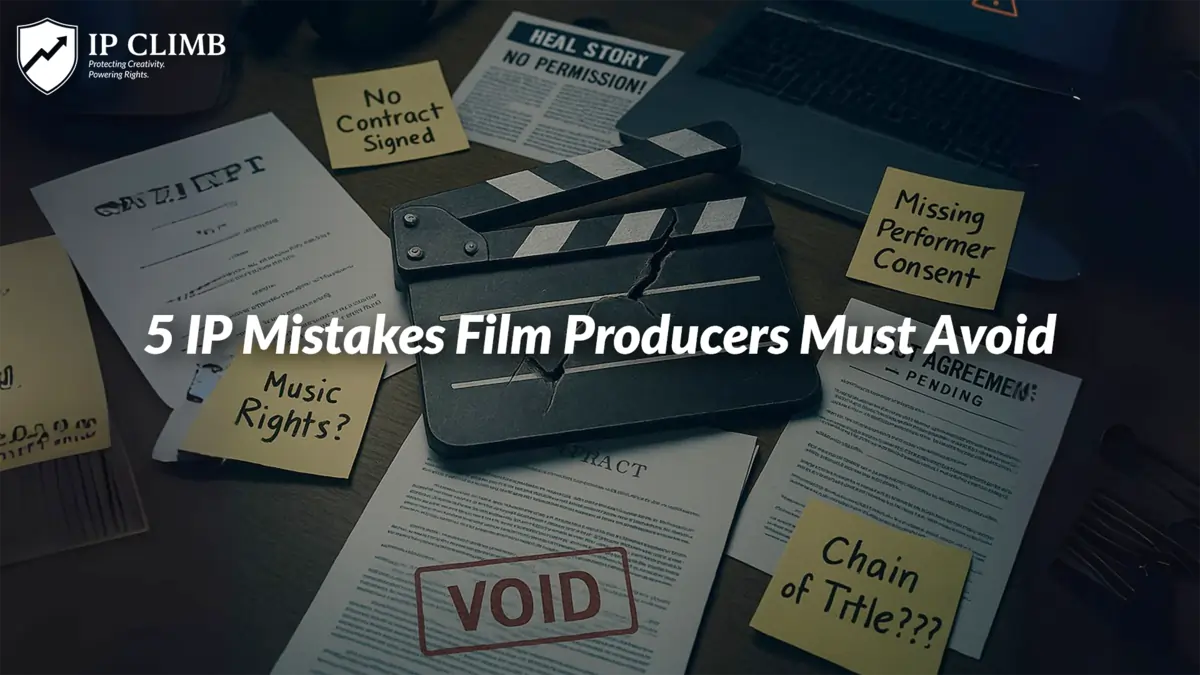
5 IP Mistakes Film Producers Must Avoid

In the film industry, overlooking Intellectual Property can cost producers much more than they imagine — from legal notices and takedowns to stalled OTT releases and lawsuits. Many of these issues stem from simple, avoidable missteps during production.

This blog highlights the five most common IP mistakes film producers make — and how to steer clear of them.

Why IP Matters for Producers?

Every film is a bundle of IP rights: screenplay, music, dialogues, visuals, performances, and more. A producer’s success in monetizing a film — whether through theatrical, satellite, digital, or remake rights — depends entirely on how tightly those IPs are secured.

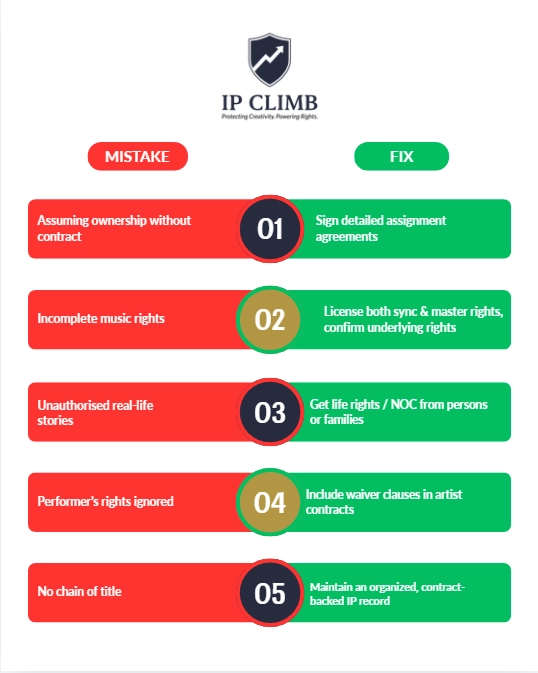
Mistake #1: Assuming You Automatically Own All Rights

The Problem: Many producers believe that because they commissioned or paid for a script, music, or performance, they own it. But under Indian law, copyright and performer’s rights vest with the creator unless assigned in writing.

Fix

  • Always sign assignment agreements with writers, composers, lyricists, actors, editors, and other key contributors.
  • The agreement should clearly state: “All rights including copyright and performer’s rights are irrevocably assigned to the producer in perpetuity and worldwide.”
 

Mistake #2: Using Music Without Proper Licenses

The Problem: Producers often license music from a label and assume it covers everything. But the underlying rights in lyrics and composition may still lie with the original creators. A film can face takedown if even one of these rights isn’t cleared.

Fix

  • Always obtain both:
    1. Synchronization Rights – to use the music in the film
    2. Master Rights – for the actual sound recording
  • Ensure the label has acquired rights from lyricists and composers too — or get direct permission.

Mistake #3: Not Securing Life Rights for Biopics or Real Events

The Problem: Telling a true story? Even if it’s in the public domain, you cannot use names, likeness, or personal events without legal clearance — especially if the person is alive or has a surviving family.

Fix

  • Get a Life Rights Agreement or No-Objection Certificate (NOC) from the person or their estate.
  • When adapting books, sign a Story Rights Option Agreement with the author or publisher.

Mistake #4: Missing Performer’s Rights Waivers

The Problem: Performers — including actors, singers, and dancers — have separate rights under Indian law. Even if they are paid, if you haven’t taken a written waiver, they can oppose reuse, AI duplication, or remixing of their performance.

Fix

  • Add a clause in your artist agreements that waives their moral and performer’s rights related to their contribution.
  • Example clause: “Performer hereby waives any claims or objections under performer’s rights, including any future use, edits, or commercial exploitation of the performance.”

Mistake #5: Failing to Maintain a Chain of Title

The Problem: A “chain of title” is the paper trail that proves the producer owns all IP rights in a film. Without this, sales to platforms or studios may be blocked during due diligence.

Fix

  • Keep organized records of all agreements: writers, cast, crew, music, footage, locations, etc.
  • For co-productions, document who owns what rights, including IP shares, profit splits, and territory rights.
  • Use a Rights Ownership Matrix to visually map it all.

Final Takeaway

Every successful film today is a carefully packaged IP product. Legal clarity is not just for avoiding lawsuits — it’s a passport to monetization. By avoiding these five common mistakes, producers can make their films not only creatively rich, but commercially secure.
Leave a Comment

Your email address will not be published. Required fields are marked *

×

    PitchRoom


    Scroll to Top