IP Climb

IP CLIMB

IP Insights

Who Owns What In A Film? A Guide To Rights In Indian Cinema

When a film is made, it’s more than just a creative vision, it’s a complex web of rights. Each contributor leaves behind not just their creative footprint, but also a potential legal stake in the project. For producers, creators, and collaborators, understanding “who owns what” is crucial for clarity, commerce, and compliance.

This blog breaks it down in the simplest way possible — no jargon, just clarity.

Why Rights Matter

Rights aren’t just legal formalities, they determine who can:

  • Sell the film to a platform
  • License songs or dialogues for ads
  • Adapt the story into a web series
  • Sue or be sued for infringement

If you don’t own it — you can’t exploit it.

Key Elements in a Film & Who Typically Owns Them

Element Typical Owner (Unless Otherwise Agreed)
Script / Screenplay Writer (can assign/often assigned to producer via contract)
Direction Director (but rights often assigned to producer)
Cinematography / Footage Cinematographer, unless assigned to producer
Music (Lyrics + Composition) Lyricist + Composer; music label may later acquire rights
Performances (Actors) Actor, unless performer’s rights are assigned
Background Score Composer (often under a work-for-hire or assignment)
Edits / Cuts Editor, but copyright lies with producer if done under contract
Final Film (Compilation) Producer (only if all individual rights are assigned properly)

What a Producer Must Do to Secure Ownership

To own the complete rights in a film, the producer should:

Sign Assignment Agreements

  • With the writer, composer, lyricist, editor, etc.
  • Clearly mention that “all rights, including copyright and performer’s rights, are assigned in perpetuity and worldwide.”

Include Performer’s Consent Clauses

  • Particularly for actors and singers (performer’s rights are separate from copyright)

Obtain Music Licenses or Assignments

  • Don’t rely on verbal deals — sync and master rights should be cleared

Secure Work-for-Hire Agreements (where applicable)

  • Especially useful for technicians or junior contributors

Mistake Impact Prevention
No written agreement with scriptwriter Writer retains rights, producer cannot sell remake rights Always execute a rights assignment agreement
Using existing song without license Infringement; legal notice or takedown possible Get synchronization rights before use
Assuming music label owns lyrics Lyricist may sue even if label gave permission Check chain of title for each element
Ignoring performer’s rights Actors or singers can restrict future uses Include performer’s release clause in contract

Indian Copyright Law Basics

Under the Copyright Act, 1957:

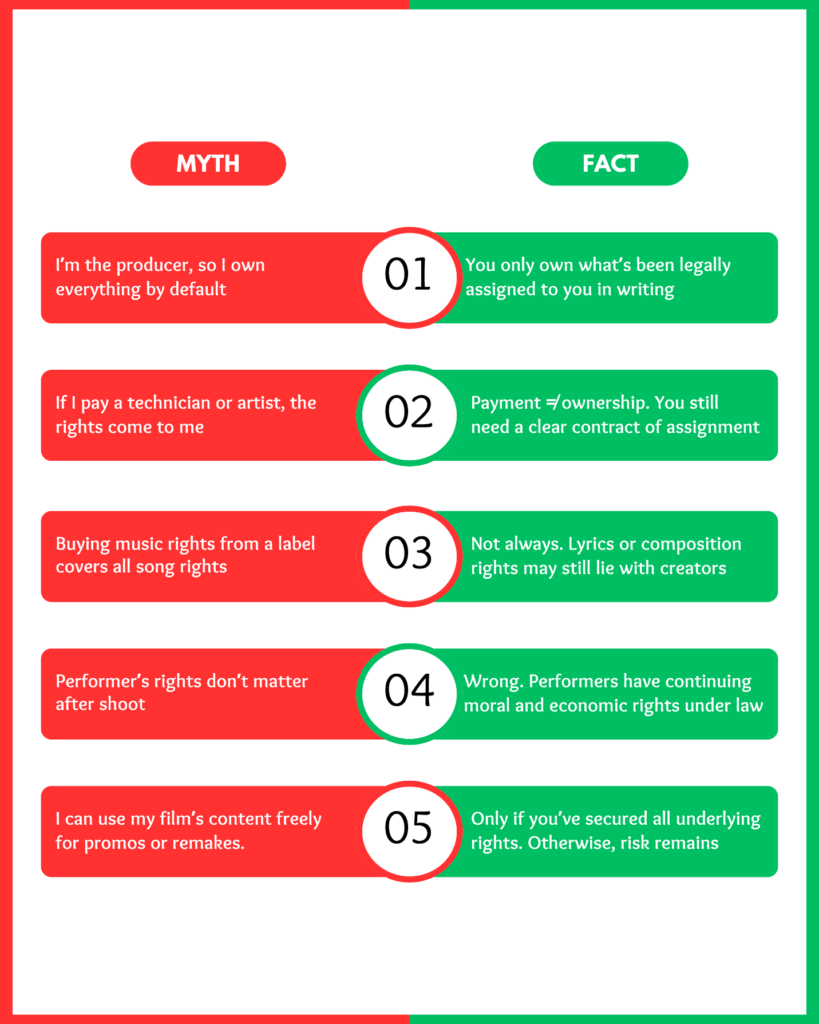
  • Copyright initially vests with the creator, unless there’s a contract to the contrary.
  • Section 17 governs authorship and ownership — the producer does not automatically own everything.
  • Assignments and licenses must be in writing to be valid.

A signed agreement is not a formality — it’s the only way to secure rights legally.

Summary

Filmmaking is a collaboration — but rights must be consolidated to make the film marketable. In the absence of proper agreements, producers risk losing money, deals, and even ownership. Whether you’re a creator, producer, or platform — understanding who owns what in a film isn’t just legal housekeeping — it’s essential business hygiene.

Leave a Comment

Your email address will not be published. Required fields are marked *

×

    PitchRoom


    Scroll to Top